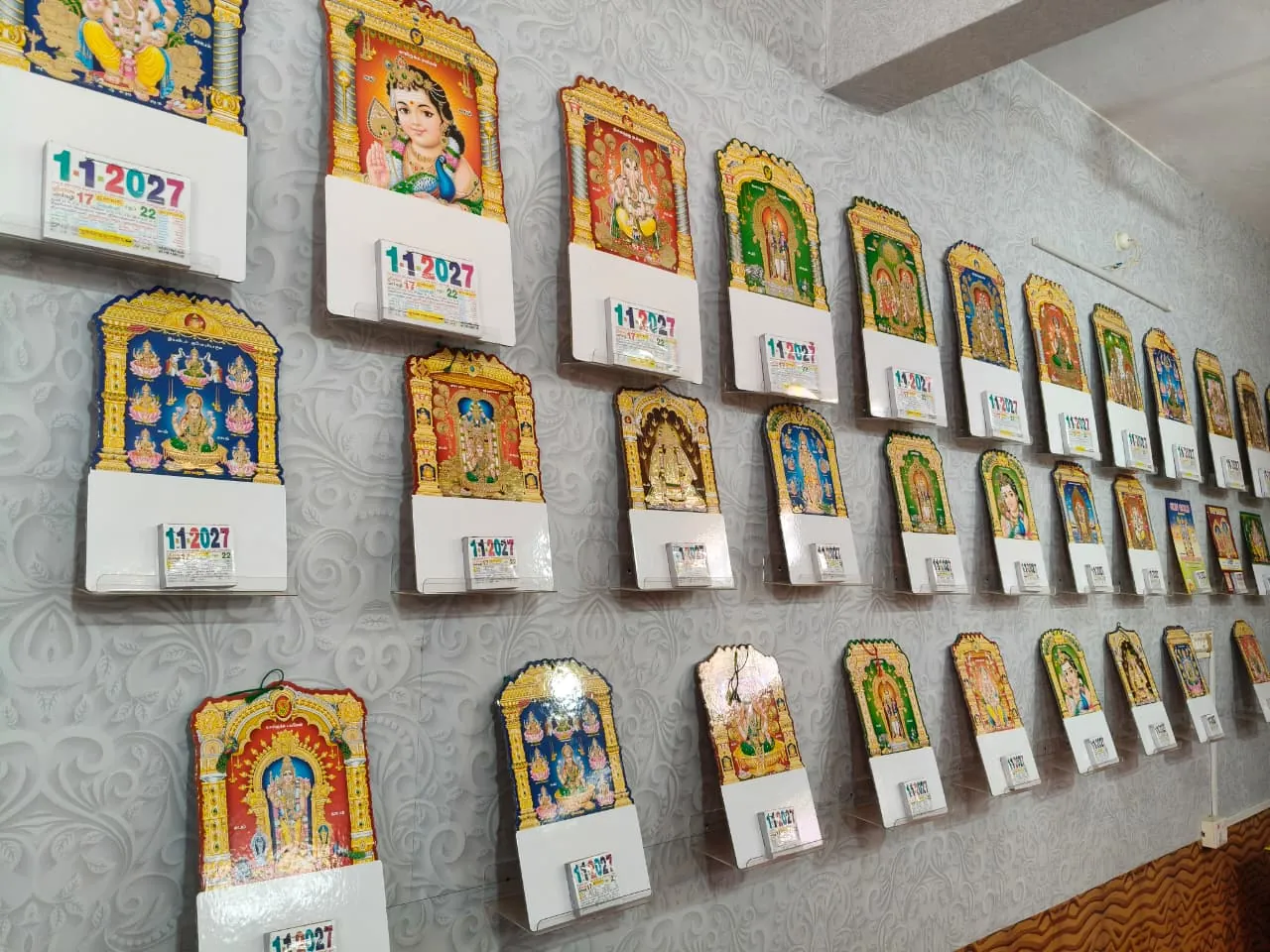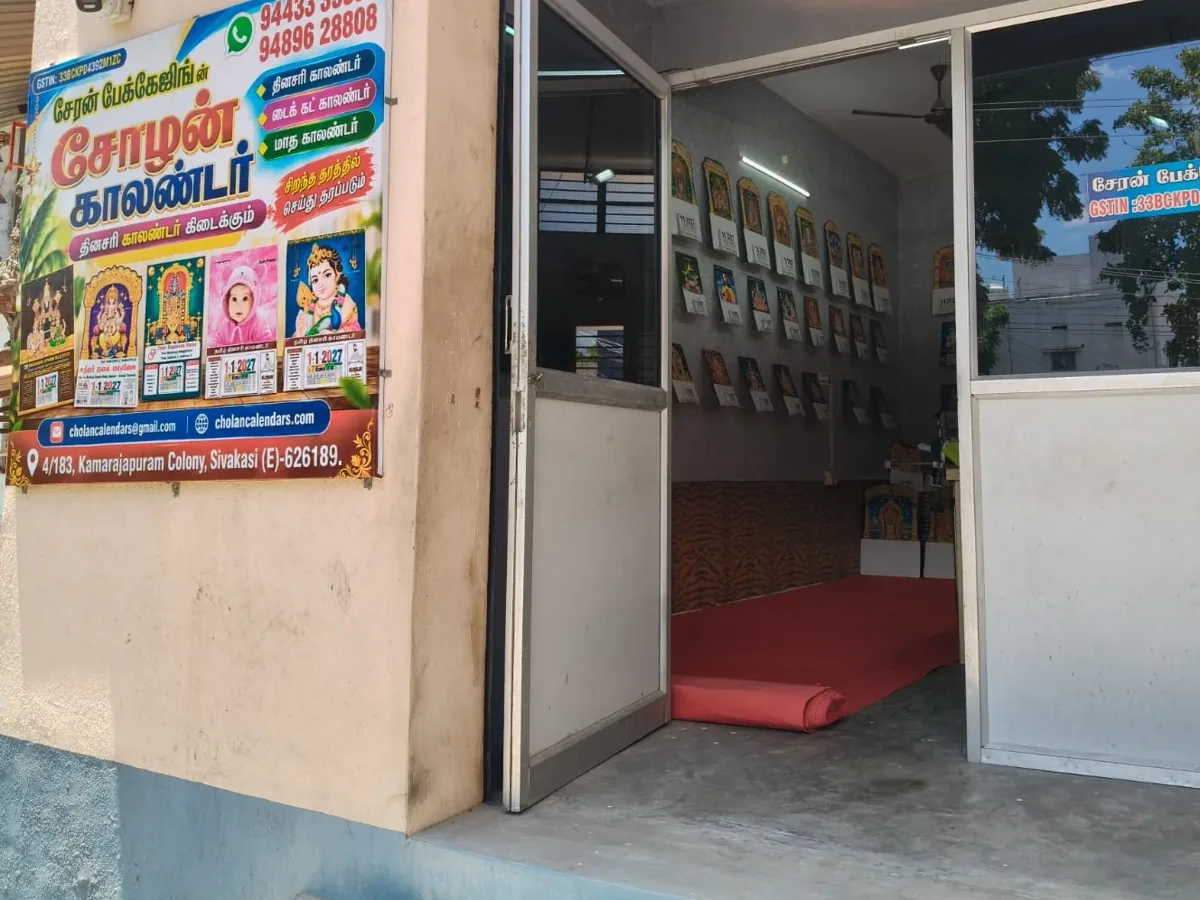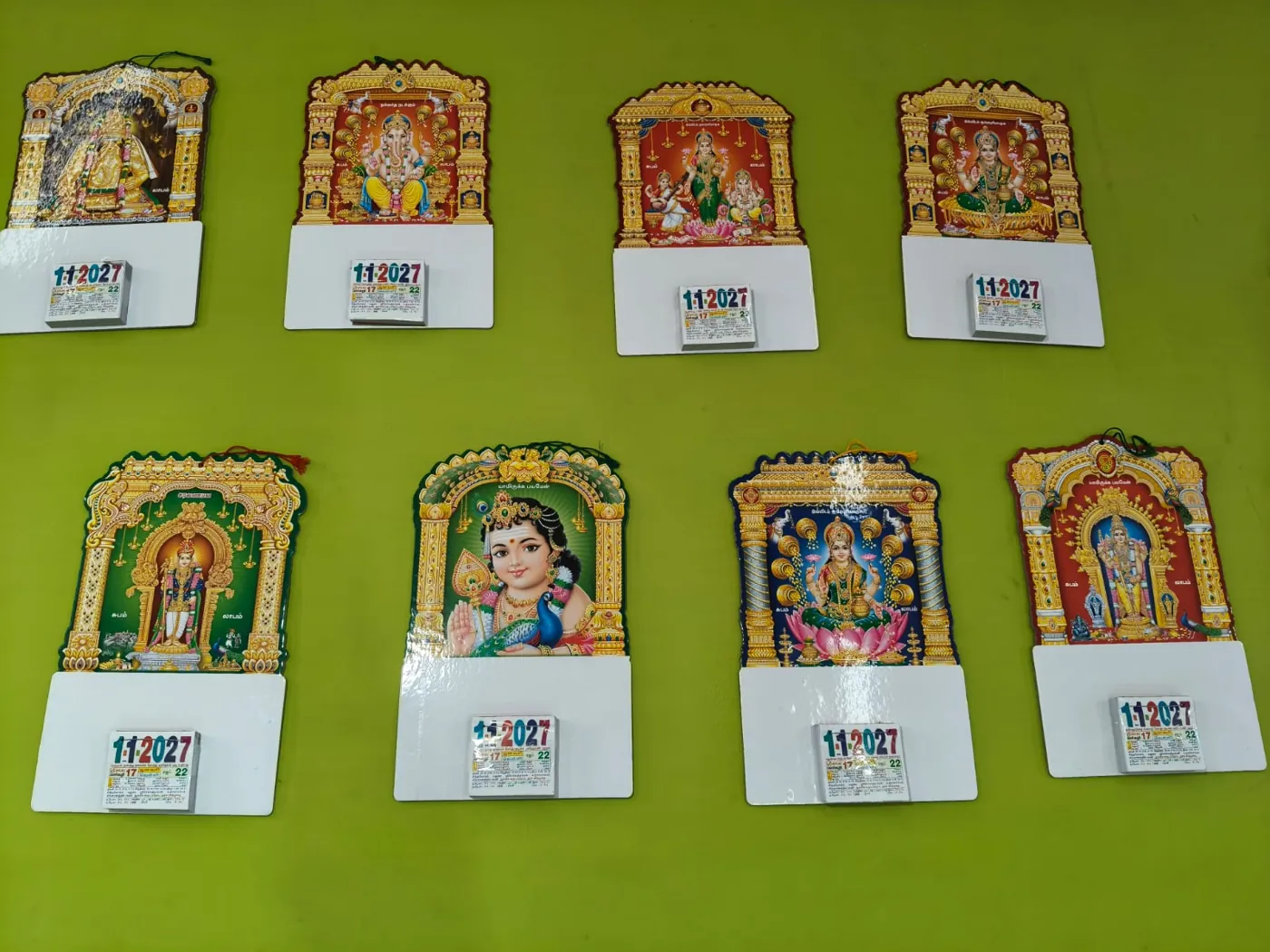
Two calendars can carry exactly the same picture and still look completely different on the wall. The difference is the finish. Here is what each option actually does, and when it is worth paying for.
Gold foil stamping
A thin metallic foil is pressed onto the board with heat and a metal die, so only the shape of the die picks up the foil. The result is a real mirror-like shine rather than printed "gold-coloured" ink.
- Best for: deity frames, temple arches, borders and the shop name in the header.
- Why buyers like it: it catches light from every angle, so the calendar looks rich even in a dim room or prayer corner.
- Other foils: silver, other metallic shades, and laser (holographic) foil that shifts colour as you move.
Our 11×17 and 14×24 T-cut foil calendars use foil on the die-cut board to highlight the artwork.
UV coating and glitter
UV coating is a clear varnish that is cured instantly under ultraviolet light. Applied only to selected areas (spot UV), it makes those parts glossy and slightly raised while the rest stays matte — a subtle, touchable contrast. UV can also carry glitter, which gives a sparkling festival look.
- Best for: large pictures where you want depth and sparkle across a big area.
- Why buyers like it: on a large board it reads as premium from far away.
Our biggest size, the 20×30 T-cut UV / glitter calendar, is designed around this finish.
Lamination
A thin film — gloss or matte — laid over the whole printed sheet. It protects against moisture, fingerprints and fading, and deepens the colours. Lamination is less about "wow" and more about keeping the calendar looking new until December.
So which one sells more?
There is no single winner; it depends on the buyer:
- Devotional and home calendars — gold foil on the deity frame is the finish customers recognise and ask for.
- Showroom and large display pieces — UV and glitter give the most impact per rupee on a big surface.
- Everyday corporate giveaways — a clean print on good board, with foil only on the company name, keeps cost sensible while still looking premium.
Tip for dealers
Keep one sample of each finish at your counter. Customers choose finishes by seeing them in hand, not from a description. Ask us for a sample kit before the season starts.